Laser cutting machines · 4 machines

From CAD file to finished part.

Fiber laser cutters follow your drawing directly: no punches, no dies, no tool changes. Parts come off the bed with clean edges, ready for bending or welding.

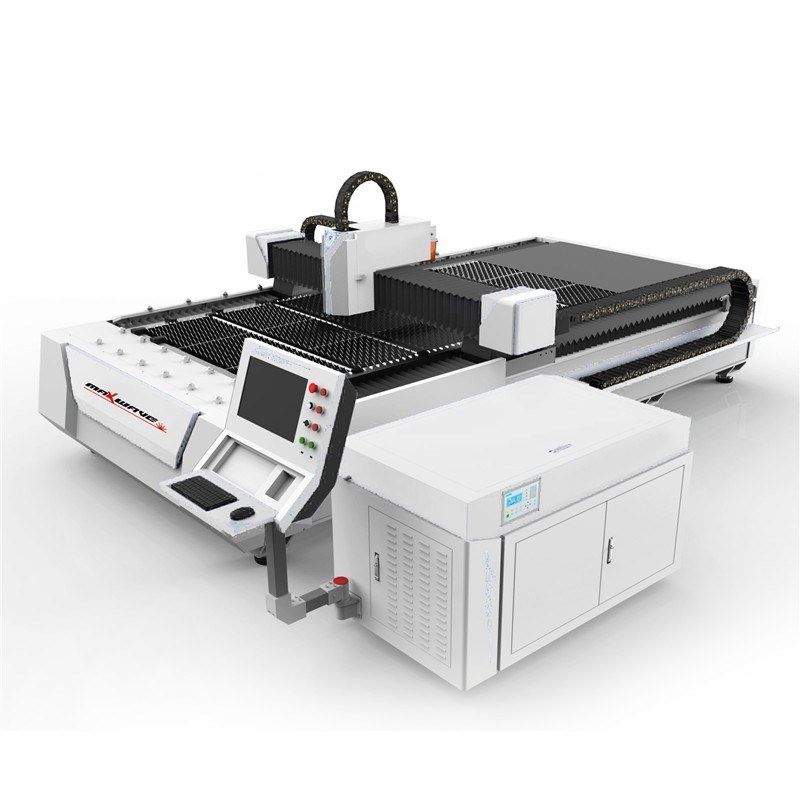
1530 fiber laser cutting machine: open 1500 × 3000 mm cutting bed with gantry, operator console and separate laser source cabinet
FlagshipFiber Laser Cutting Machine 1530 (1500 × 3000 mm, 500–2200 W)1500 × 3000 mm Working area500–2200 W Laser power±0.02 mm Positioning accuracy

Sheet fiber laser cutters

Open-bed machines for carbon steel, stainless steel, aluminium, brass and copper sheet.

Not the exact machine you need?

This website shows part of our range. Whatever you need, from a machine we don’t list to a complete production line, we supply it as one solution. Contact us any time.

Where fiber laser cutting fits

Fiber lasers cut metal sheet fast and accurately, and they switch between parts without tooling. That makes them the default tool for sheet-metal shops, signage makers, cabinet and enclosure builders and kitchen-equipment factories.

Power decides the maximum thickness and the speed on thin sheet. Bed size decides the largest sheet you can load. Ask us for a nesting test on your own DXF files before you choose.

Which cutter for which job?

For small, precise parts up to 3 mm, such as jewelry blanks, electronics shims and nameplates, the benchtop MC3030 cuts a 300 × 300 mm sheet at 800–2000 W. For general sheet metal on a 1500 × 3000 mm bed, the open 1530 cutter runs 500–2200 W.

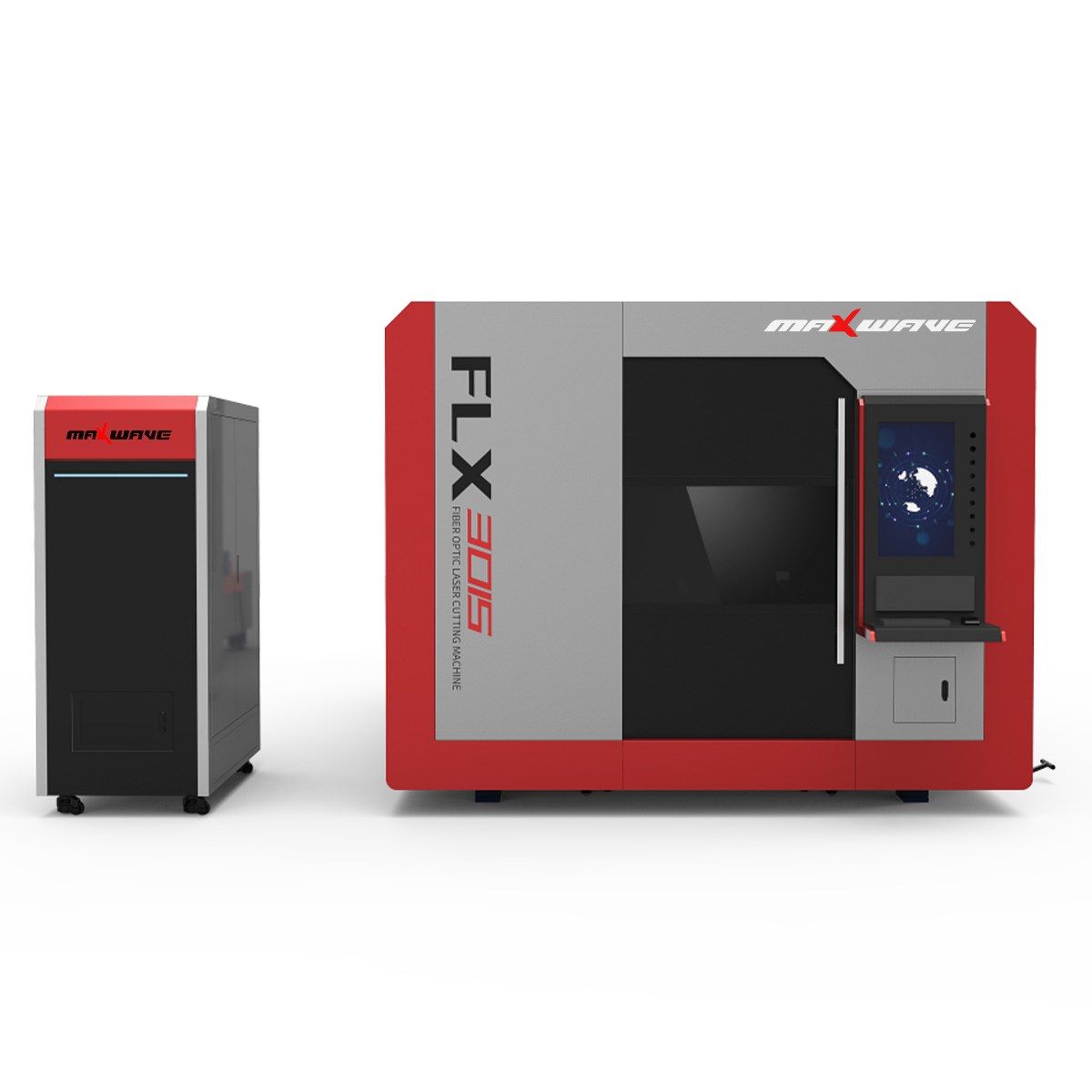
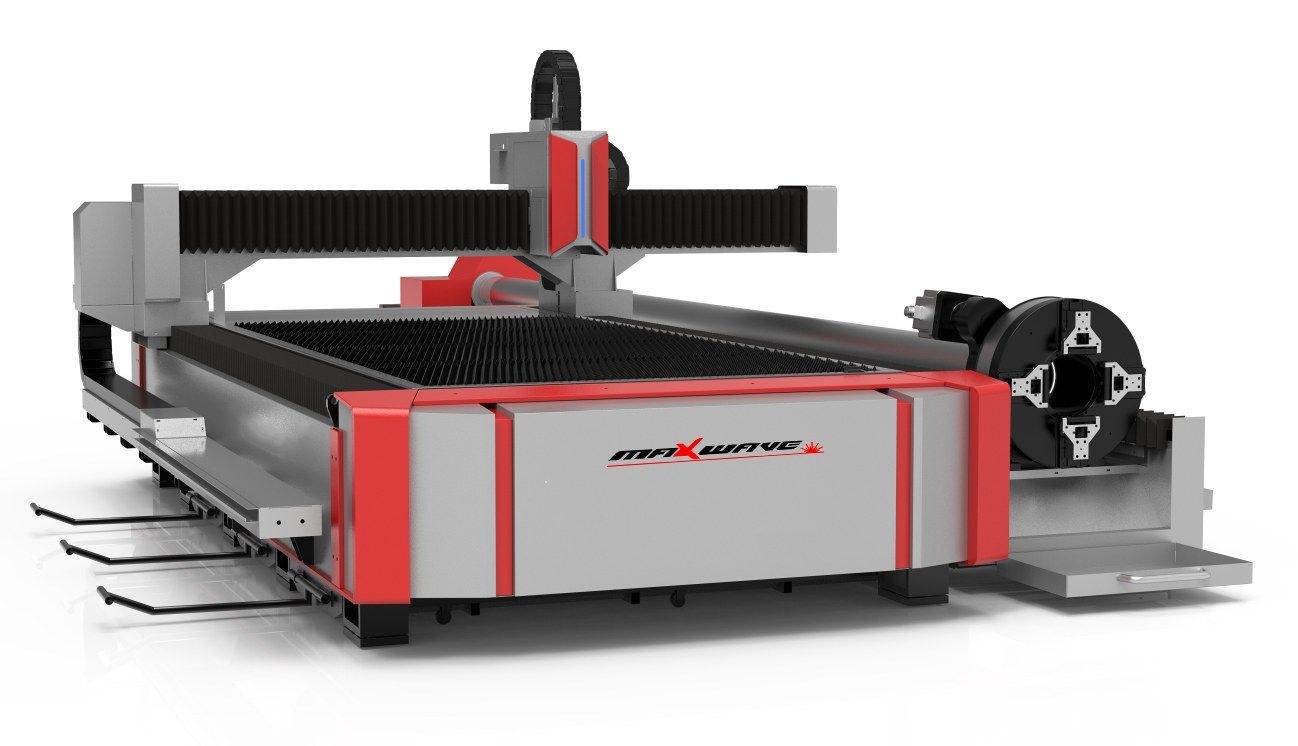
For medium and thick plate in volume, the enclosed MW-FLX3015 takes a 3, 6 or 12 kW source and contains light and fumes. If you cut tube as well as sheet, the MW-FLSP adds a rotary axis for round tube from 20 to 320 mm. Speeds by power and thickness are in our cutting parameters guide.

Read before you buy

All guides
Engraving & cutting · 11 minFiber laser cutting speed chart: 1000–15,000 WA 1000 W fiber laser cuts 1 mm carbon steel at 10–15 m/min and 12 mm at 0.4–0.6 m/min with oxygen, and stainless steel up to 5 mm with nitrogen. At 3000 W the limits rise to 22 mm carbon steel and 10 mm stainless steel. For 1000–3000 W the tables are JPT's reference settings; for 4000–15,000 W they are Maxphotonics (MAX) data, which also marks the thickness each power can cut in volume: 14 mm stainless steel at 6000 W, 20 mm at 10,000 W and 25 mm at 12,000 and 15,000 W. Maxwave sends both sheets with its cutting machines. Use them as a starting point and fine-tune on your own plate.Engraving & cutting · 8 minFiber laser cutting machine installation: site preparation and commissioningA fiber laser cutter is installed in four stages: prepare the site, place and level the machine, connect power, gas and cooling, then commission the control system and the capacitive height controller. A 3 kW machine draws about 22–27 kVA and a 12 kW machine 64.7 kVA; enclosed machines weigh 7.5–8 t. The height controller is commissioned in a fixed order: servo parameters, travel limits, motor direction, servo calibration, homing and capacitance calibration, then following gain and height. Most of the work is done before the crate opens.Buying · 11 minBuying a laser machine from China: risks and an import checklistThe real risks of buying a laser machine from China are a short or vague warranty, an unnamed laser source, the wrong voltage, missing CE or FDA papers, no spare parts after delivery, and payment fraud. Before you pay, put the job, the laser source model, your electrical supply, the documents, the Incoterm, the warranty and the payment terms in writing, then have the factory prove the machine on your own parts.Laser welding · 10 min3-in-1 laser welder, cleaner and cutter: is it worth it?A 3-in-1 (or 4-in-1) handheld fiber laser is worth it if you weld most of the time and clean or cut now and then. One continuous-wave source welds like a dedicated handheld welder of the same power, cleans weld seams and rust, and cuts thin sheet of about 1–2 mm. It is a compromise for precision cleaning, where a pulsed cleaner leaves a better surface, and for regular or thick cutting, where a CNC fiber cutter or a plasma cutter does the job better.Safety · 9 minHandheld laser safety: Class 4 cleaning and welding lasersHandheld fiber laser cleaners and welders are Class 4 lasers: the direct beam, mirror-like reflections and even diffuse reflections can permanently damage eyes, burn skin and start fires. Use them only inside a laser-controlled area, with eyewear rated for the laser's wavelength and output, local fume extraction, trained operators and a named laser safety officer.

FAQ

Questions buyers ask

What can a fiber laser cutting machine cut?

Carbon steel, stainless steel, aluminium, brass, copper and galvanized sheet. It is not used for wood or acrylic; for those, use a CO2 laser.

Which assist gas do I need?

Oxygen for thicker carbon steel, nitrogen for clean, oxide-free edges on stainless and aluminium, and compressed air for low-cost cutting of thin sheet.

Get a quote