CO2 engraving & cutting machines · 1 machine

Wood, acrylic, leather. Cut and engraved.

CO2 lasers at 10.6 µm are absorbed by organic materials and most plastics. One machine engraves photos on wood and cuts acrylic letters with a polished edge.

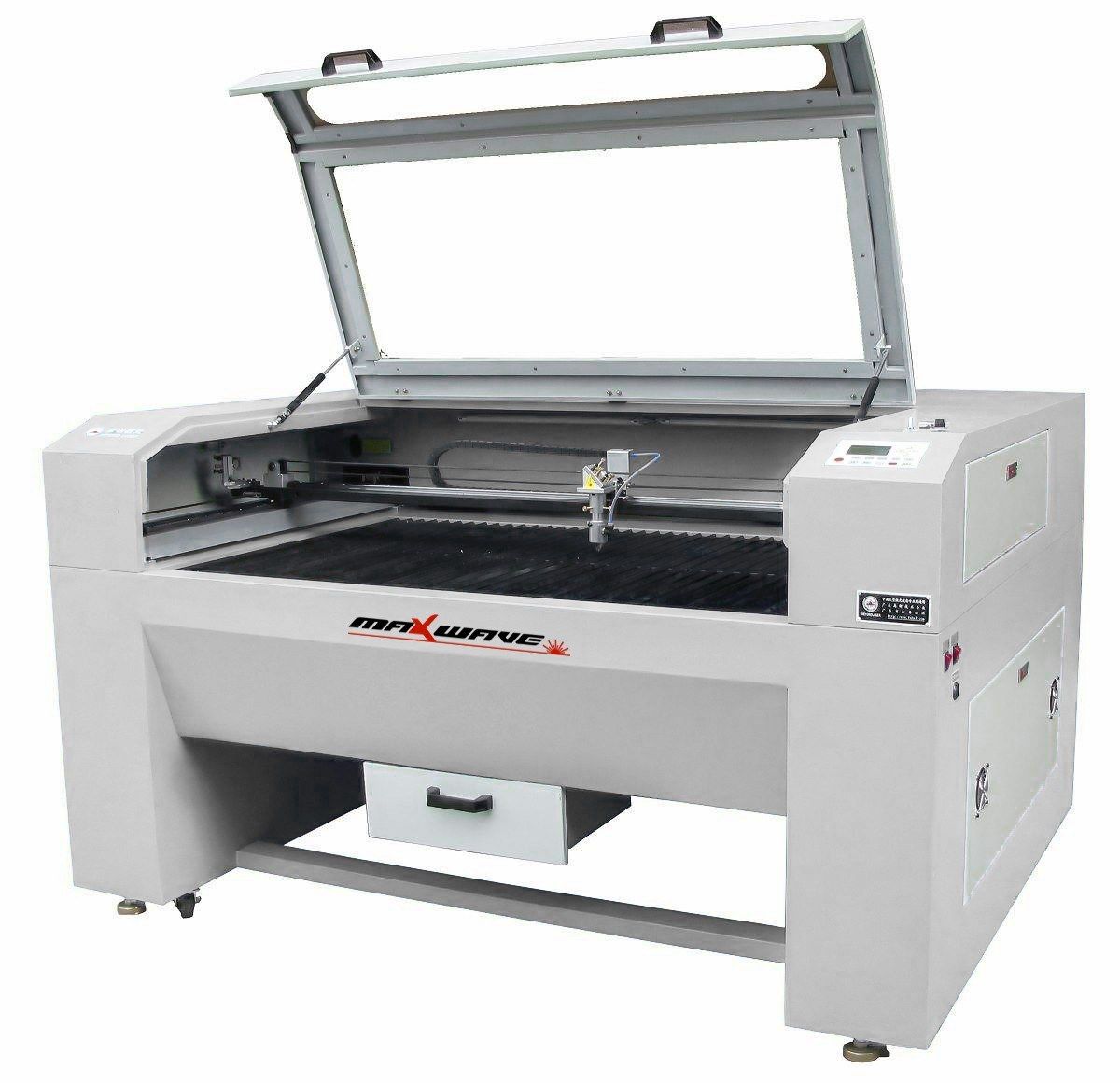
MW-CE CO2 laser engraving and cutting machine with the lid raised, showing the work bed, gantry, side control panel and front drawer
FlagshipCO2 Laser Engraving and Cutting Machine 1390 / 1610 (60–150 W)1300 × 900 / 1600 × 1000 mm Working area60–150 W Laser power< 0.01 mm Repositioning accuracy

Flatbed CO2 engravers

60–150 W glass-tube machines with honeycomb or blade tables and up-down options.

Not the exact machine you need?

This website shows part of our range. Whatever you need, from a machine we don’t list to a complete production line, we supply it as one solution. Contact us any time.

What a CO2 engraver does

CO2 machines are the standard tool for signage, gifts, packaging prototypes, model making and garment cutting. They cut acrylic with a flame-polished edge and engrave wood, leather and coated metals.

Choose bed size by your sheet size and tube power by the thickest material you cut. Glass tubes are consumables; plan a spare in your budget. The CO2 laser engraver buying guide covers what a CO2 laser engraving machine can and cannot cut.

Read before you buy

All guides
Engraving & cutting · 10 minCO2 laser engraving machine: bed size, tube power and priceChoose the bed from your largest regular sheet and the tube from your thickest cut. A 1390 works on 1300 × 900 mm and a 1610 on 1600 × 1000 mm, and acrylic needs about 10 W of tube power per millimetre, so 60 W cuts about 6 mm and 150 W about 15 mm cleanly. In October 2026, US sellers listed 130–150 W glass-tube machines in these bed sizes at about $6,600–8,000, and RF metal-tube machines with a 1300 × 900 mm bed at $13,450–25,500.Laser marking · 8 minFiber vs UV vs CO2 laser marking: which laser for which material?Choose a laser marker by material, because absorption depends on wavelength. Fiber (1064 nm) is the default for metals, MOPA fiber adds colour on stainless steel and black on anodized aluminium, UV (355 nm) gives fine low-heat marks on plastics, glass and PCBs, and CO2 (10.6 µm) marks wood, leather, textiles, paper and glass but not bare metal.Laser marking · 9 minHow much does a fiber laser marking machine cost?Listed US retail prices seen in October 2026 put an open 20–50 W Q-switched fiber laser marker at about $1,600–3,000. MOPA markers ran from about $2,000 at 20 W to about $12,000 at 200 W, UV markers about $2,700–14,000, RF CO2 galvo markers about $2,800–9,000, and an enclosed US-brand MOPA workstation $17,000–26,000, all before freight, import taxes, fume extraction and safety equipment.Buying · 11 minBuying a laser machine from China: risks and an import checklistThe real risks of buying a laser machine from China are a short or vague warranty, an unnamed laser source, the wrong voltage, missing CE or FDA papers, no spare parts after delivery, and payment fraud. Before you pay, put the job, the laser source model, your electrical supply, the documents, the Incoterm, the warranty and the payment terms in writing, then have the factory prove the machine on your own parts.

FAQ

Questions buyers ask

Can a CO2 laser cut metal?

Not practically at these power levels. It can mark coated or anodized metal; for cutting metal, use a fiber laser.

What thickness of acrylic can a 100 W CO2 laser cut?

Typically up to about 10–15 mm in one pass, depending on speed and edge quality required. We can test your material.

Get a quote