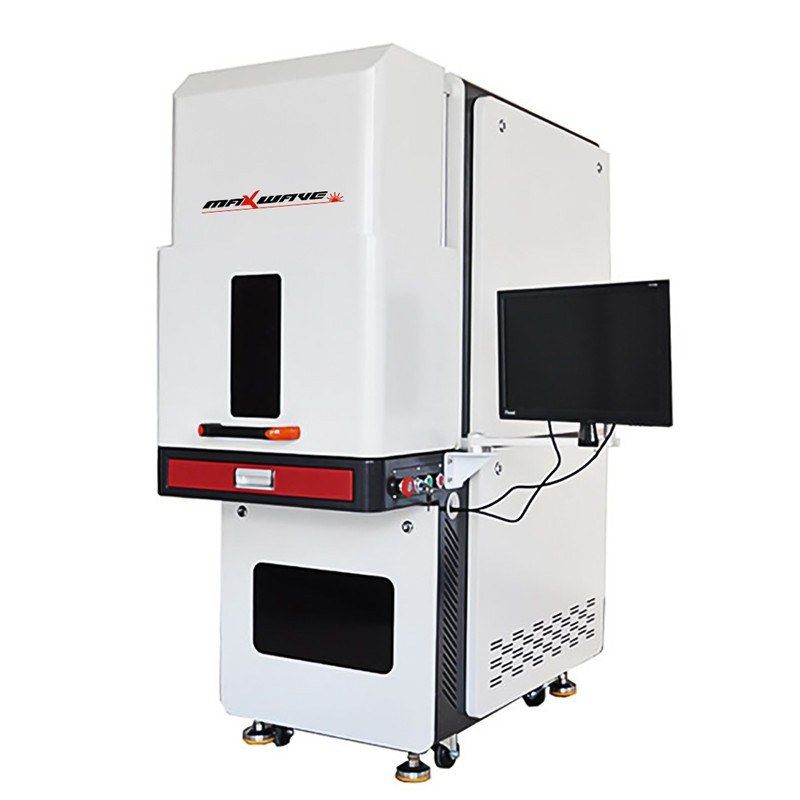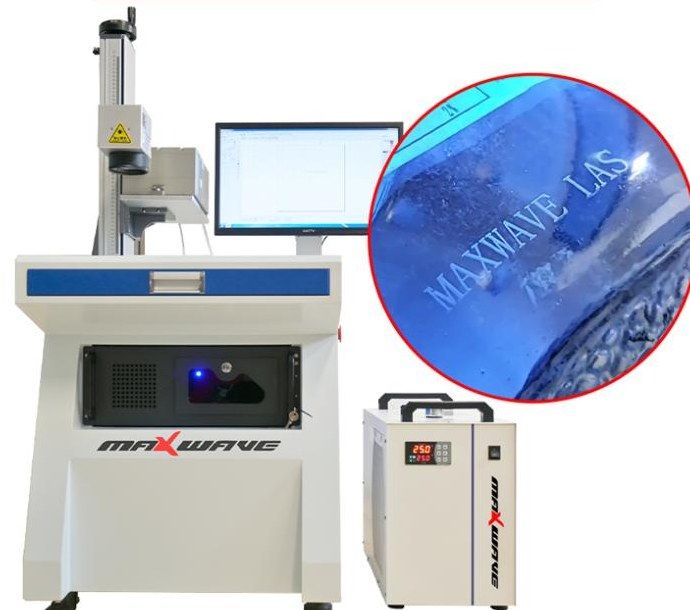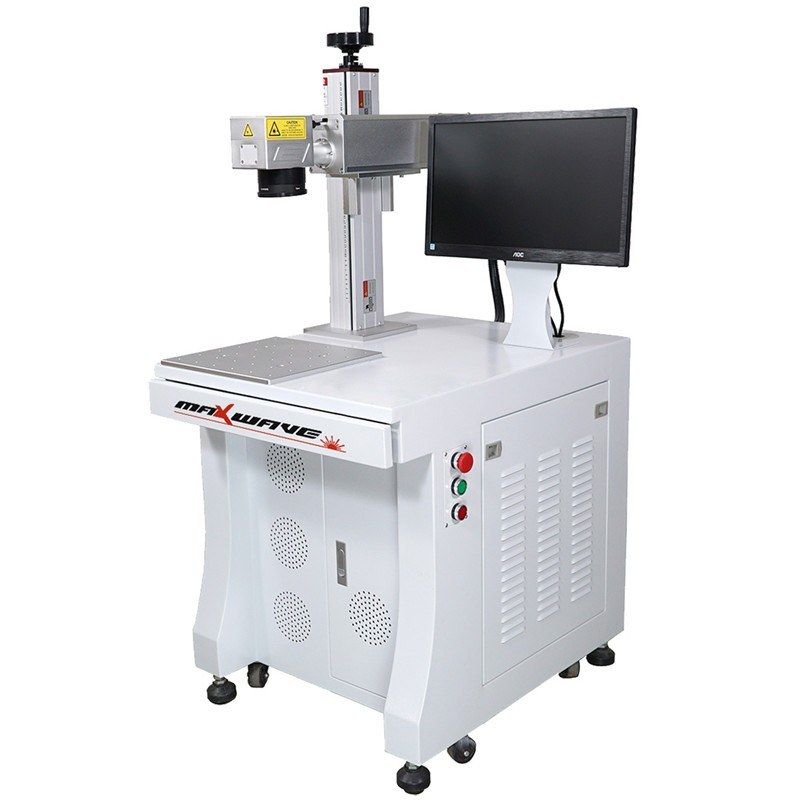
Fiber and MOPA markers
Desktop Fiber Laser Marking Machine 20–100 W
- Laser power
- 20–100 W
- Marking area
- Up to 300 × 300 mm
- Marking speed
- ≤ 7000 mm/s
Laser marking machines · 11 machines
The wavelength decides what you can mark. Fiber lasers at 1064 nm mark metals, UV lasers at 355 nm mark plastics and glass with little heat, and CO2 lasers at 10.6 µm mark wood, leather, paper and denim.
Wavelength decides the material
Most industrial laser light is invisible. The visible spectrum is the thin coloured band on this ruler; our marking lasers sit either side of it, and each is absorbed best by a different family of materials.
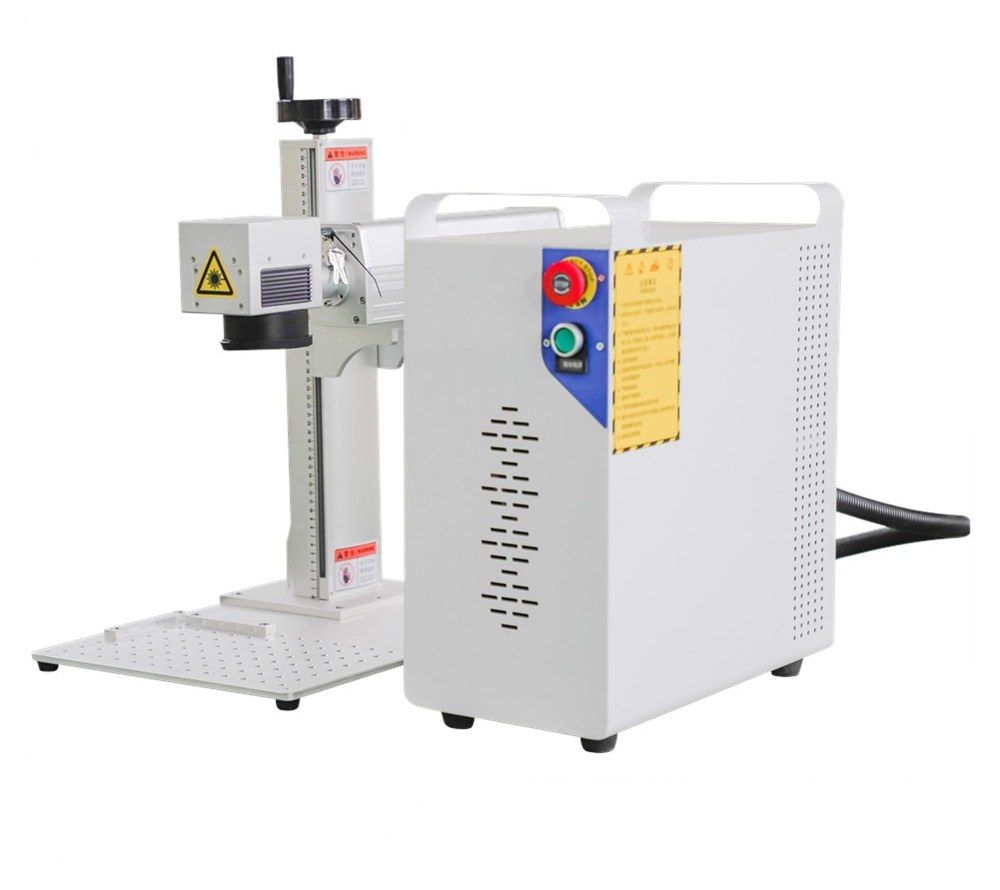
20–200 W for metals and many plastics: serial numbers, QR codes, logos, deep engraving and colour marks on stainless.
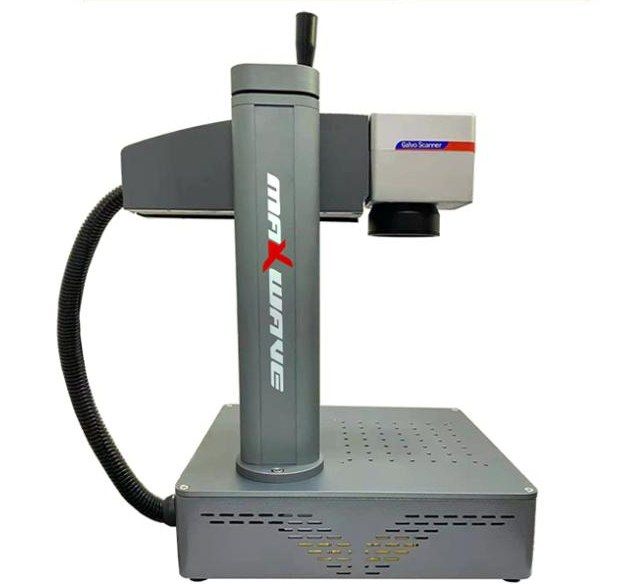
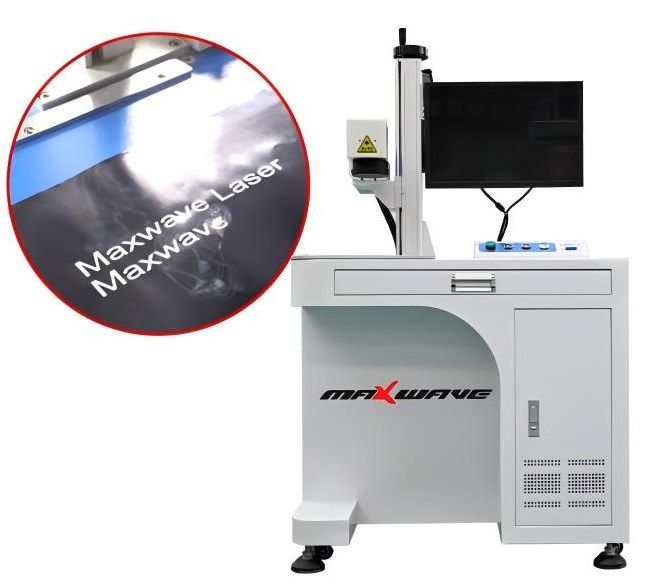
Fiber and MOPA markers
Fiber and MOPA markers
Fiber and MOPA markers
Fiber and MOPA markers
3–15 W cold marking for plastics, glass, silicone and electronics where heat would discolour the part.
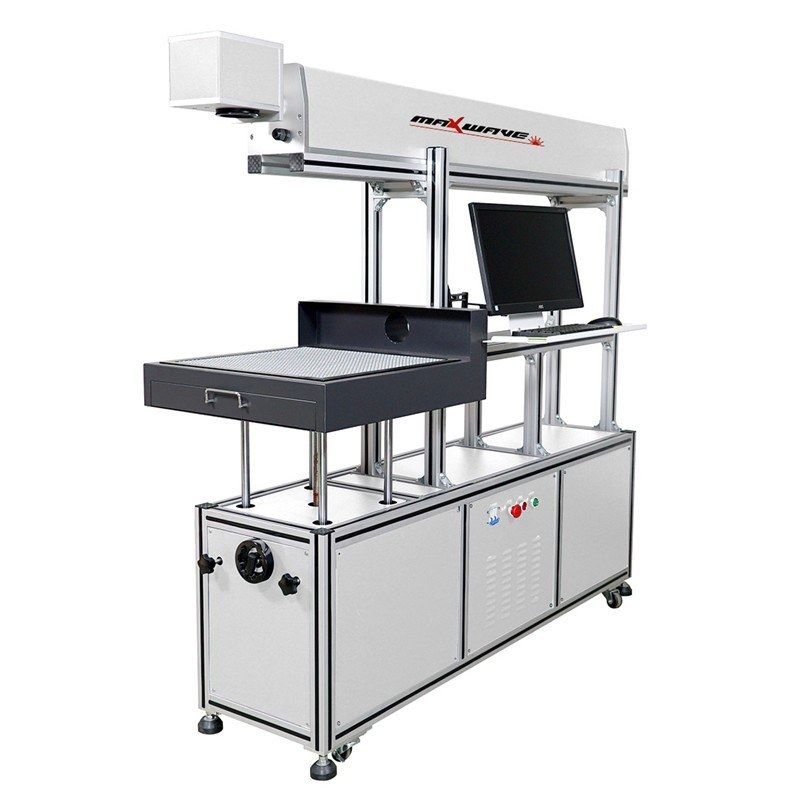
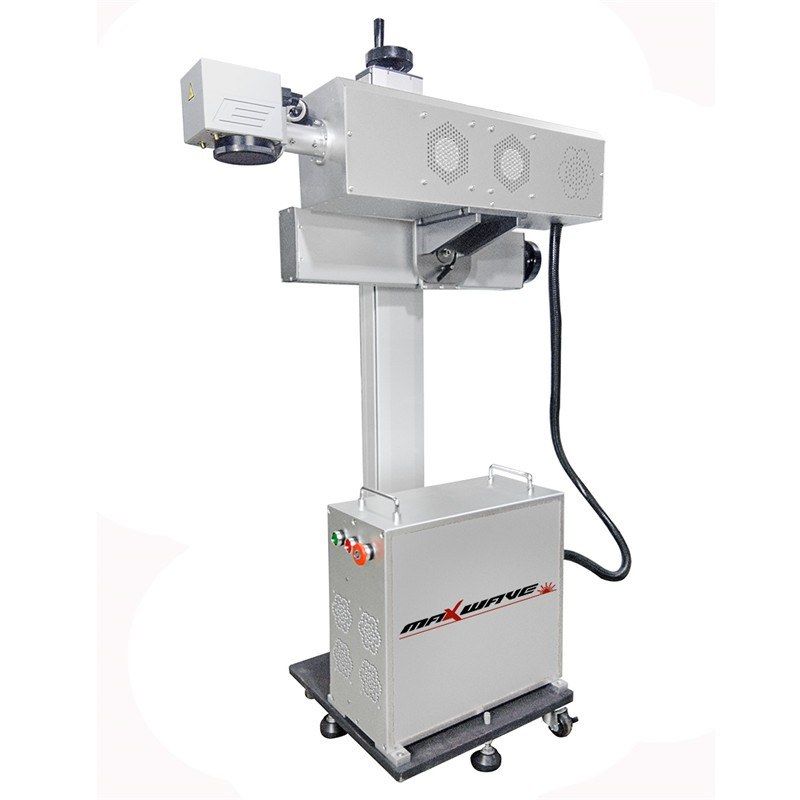
Glass-tube and RF markers for wood, leather, paper, acrylic and denim fading, including flying markers for production lines.
Marking heads you take to the part: large castings, pipes and installed equipment.
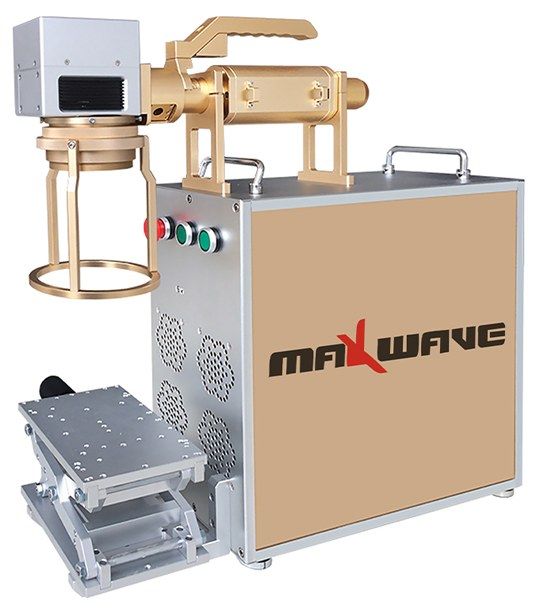
Handheld and portable markers
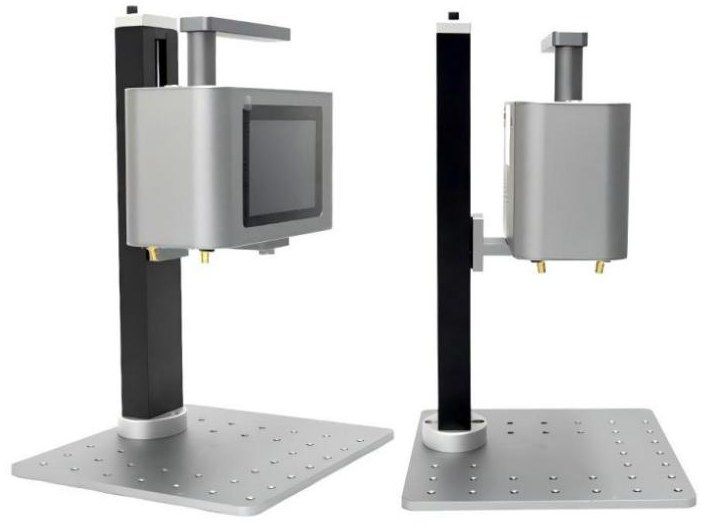
Handheld and portable markers
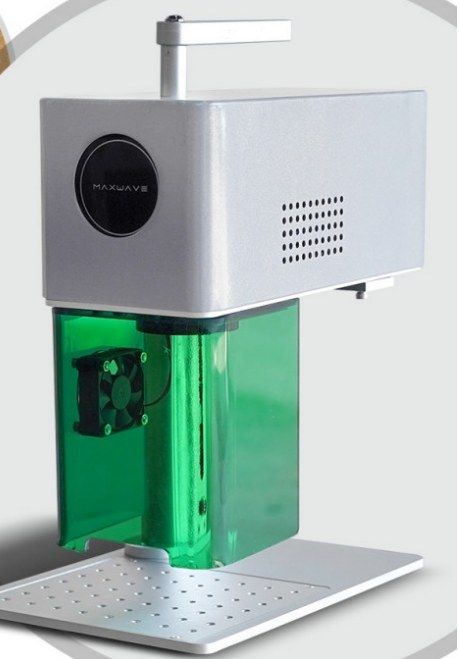
Handheld and portable markers
Not the exact machine you need?
This website shows part of our range. Whatever you need, from a machine we don’t list to a complete production line, we supply it as one solution. Contact us any time.
Compare
| Property | Fiber / MOPA | UV | CO2 |
|---|---|---|---|
| Wavelength | 1064 nm | 355 nm | 10.6 µm |
| Typical power | 20–200 W | 3–15 W | 30–150 W |
| Marks well | Steel, aluminium, brass, titanium, many plastics | Plastics, glass, silicone, PCBs, sensitive parts | Wood, leather, paper, acrylic, denim, rubber |
| Heat into the part | Moderate | Very low | Moderate to high |
| Typical uses | Part IDs, tools, jewelry, nameplates | Electronics, medical, cosmetics packaging | Packaging, garments, gifts, signage |
A galvanometer scanner steers the beam across a flat field, typically 70 × 70 to 300 × 300 mm depending on the lens. Software turns text, logos, barcodes and serial numbers into scan paths, so changing a design takes seconds and needs no tooling.
The mark is made in the material itself: by annealing, engraving, foaming or colour change. It does not rub off like ink or peel off like a label.
Choose the source by material first, then power by speed and depth. A 20–30 W fiber laser covers most part-marking jobs; 50–100 W pays off for deep engraving and high volume. MOPA sources add control over pulse width for black marks on aluminium and colour on stainless.
Then choose the format: desktop for small parts, a cabinet workstation for production with a larger table, handheld for large parts, and flying markers to mark on a moving conveyor.
FAQ
A fiber laser at 1064 nm. For black marks on anodized aluminium or colour marks on stainless steel, choose a MOPA fiber laser.
Many plastics, yes, but results vary with colour and additives. UV lasers mark a wider range of plastics with less heat and cleaner contrast.
A marker mounted over a production line that marks products while they move, synchronised with an encoder. It is used for dates, batch codes and logos on packaging, pipes and cables.
Fiber laser sources are commonly rated for tens of thousands of hours. CO2 glass tubes have a much shorter life and are replaced as a consumable; RF CO2 tubes last longer.