Short answer
The WeldStar welder manual recommends nitrogen or argon and allows compressed air when the finish matters less. It states a flow meter of not less than 15 L/min and a gauge of not less than 3 bar, with 15 bar as the table maximum. A RelFar head manual names the same three gases and an input pressure below 1 MPa, and states no litres per minute. A selection sheet gives 0.15–0.3 MPa for welding.
Key takeaways
- The WeldStar manual (version 2024.05) recommends nitrogen or argon, and allows compressed air when the surface requirement is not high.
- That manual says the flow meter is not less than 15 L/min and the pressure gauge is not less than 3 bar. Set the regulator before opening the cylinder valve. The specification table’s maximum is 15 bar, which is not the welding setpoint.
- The RelFar FWH20-S10A head manual names argon, nitrogen and filtered compressed air, and an input pressure less than 1 MPa. It does not state litres per minute.
- A factory selection sheet, already cited on the running-cost guide, gives 0.15–0.3 MPa of nitrogen or argon for welding, and 0.6 MPa for cutting and cleaning. The head-training slides reviewed here state no gas pressure or flow.

Does a laser welder need gas?
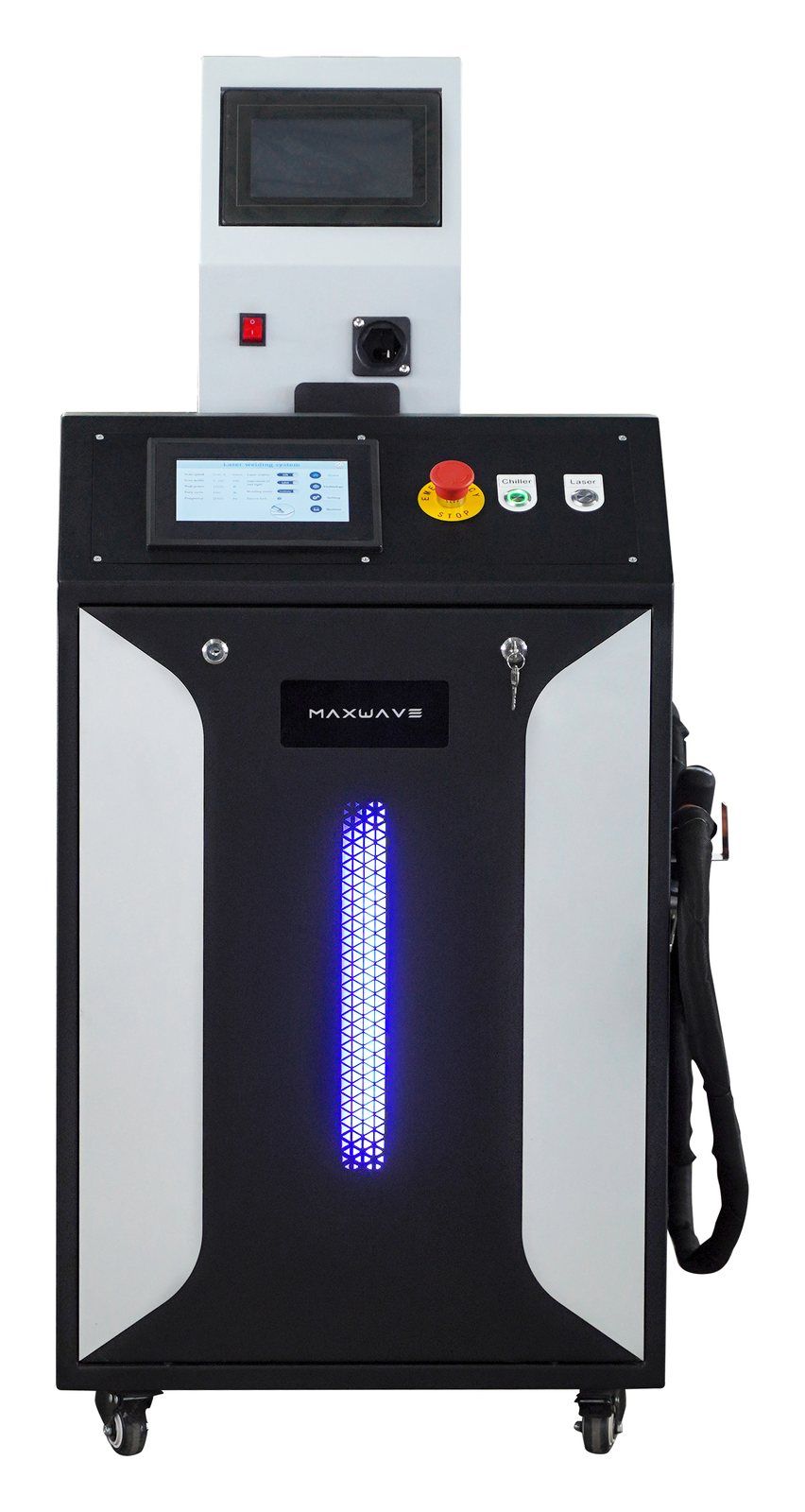
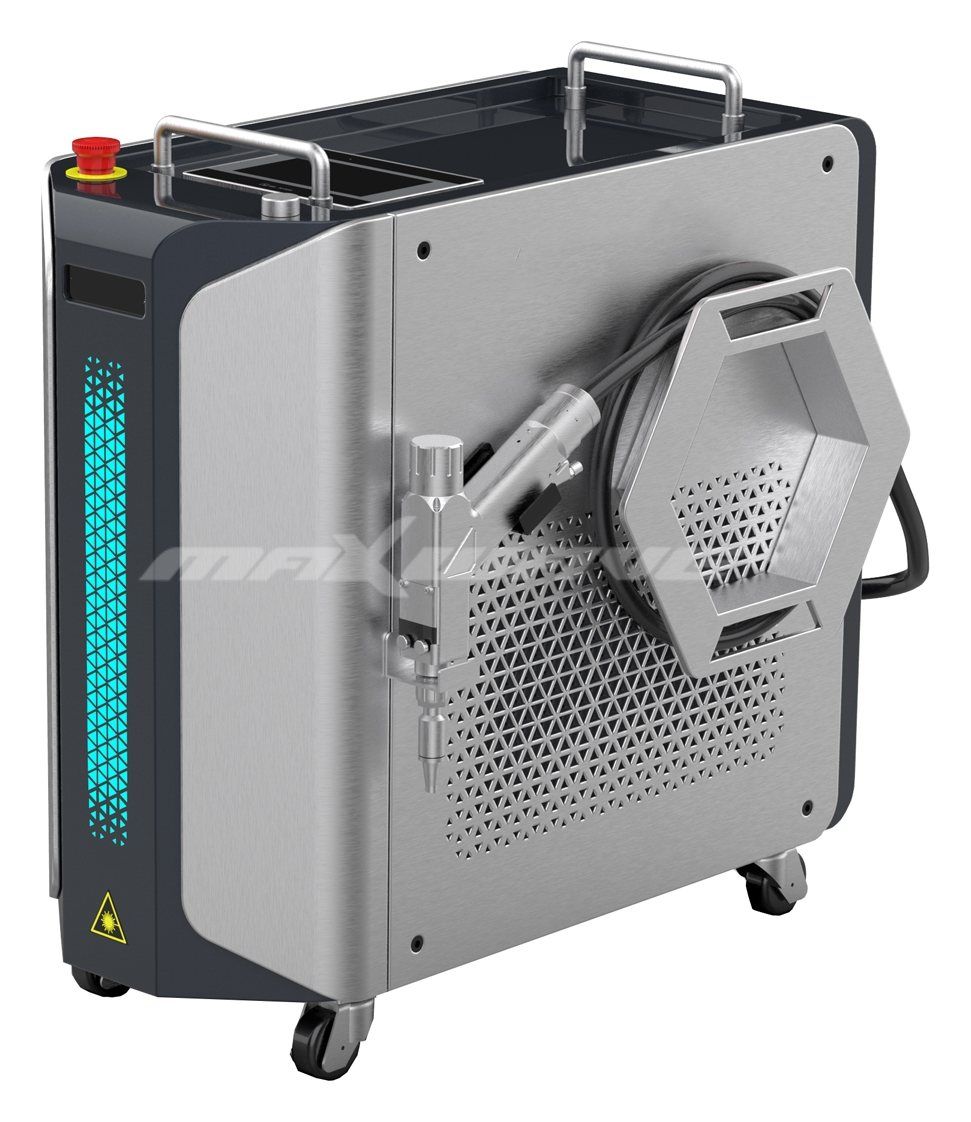
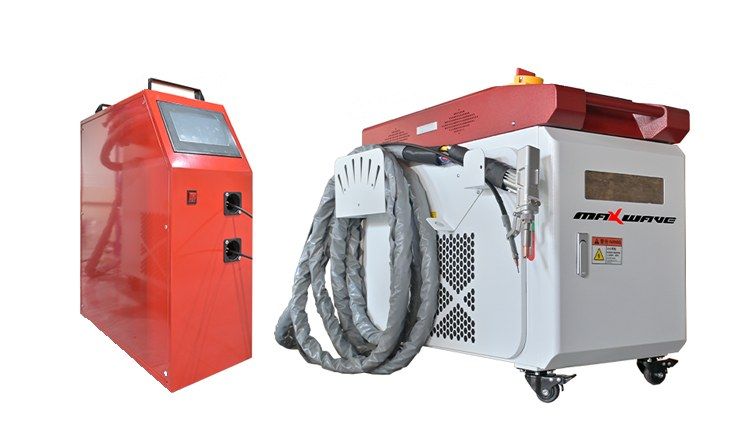
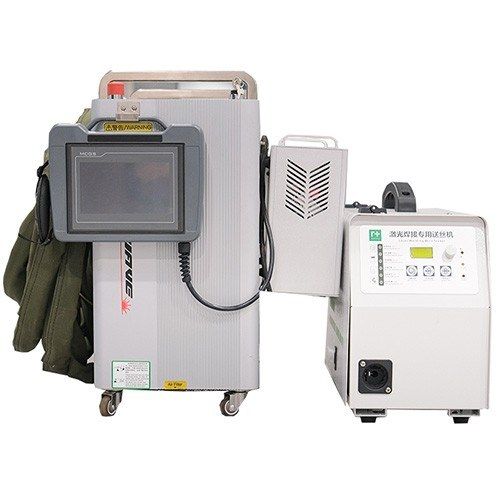
The manuals reviewed here specify a shielding gas for handheld laser welding. The WeldStar welder manual recommends nitrogen or argon, and it allows compressed air when the surface requirement is lower. A RelFar head manual names those same three gases. Neither manual states a weld with the gas connection left unused.
What the welder manual says
The Handheld Laser Welder User Manual, version 2024.05, Wuhan Maxwave Laser Technology Co., Ltd. (WeldStar air-cooled Breeze and water-cooled Aqua), recommends nitrogen or argon. It says they can prevent oxidation and produce a better welding surface. It allows compressed air when the surface requirement of the weld is not high. That sentence is the manual’s, not a separate metallurgy paper.
On installation it says the flow meter is not less than 15 L/min and the pressure gauge is not less than 3 bar. Set the regulator before you open the cylinder valve. If the valve is opened first, the manual says the gas pipe may burst. The specification table lists a maximum gas pressure of 15 bar. That is a maximum rating. It is not the pressure to set for welding. The same distinction is already on the running-cost guide.
A factory selection sheet, cited on that guide as a training reference and not as a measured flow test, gives 0.15–0.3 MPa (1.5–3 bar) of nitrogen or argon for welding, 0.6 MPa for cutting and 0.6 MPa for cleaning. It says compressed air must be dried and separated from oil and water. Litres per hour are not on that sheet.
What the head manuals say
The RelFar FWH20-S10A Smart Single Pendulum hand-welding-head manual is the head maker’s manual, not a Maxwave manual, and it is not linked here. In the installation section it says the commonly used gases are argon, nitrogen and compressed air, and that compressed air needs oil and water filtration. For protective gas it says to connect a 6 mm gas pipe, and that the input pressure is less than 1 MPa. It does not state a flow in litres per minute in that section. The phone number and web address printed in that file are not repeated here.
A head-maker training document for the 36T, 53T and 52C welding and cleaning heads and the G2 unit (27 March 2026) was read for gas figures. It states lens sizes and head weights. It does not state a shielding-gas type, pressure or flow. No gas number from that document is used on this page.
How to read the three pressures together
| Document | What it states | What it is |
|---|---|---|
| Factory selection sheet, cited on the running-cost guide | Nitrogen or argon at 0.15–0.3 MPa for welding; 0.6 MPa for cutting and cleaning | A training reference for the welding setpoint, not a measured flow test |
| WeldStar welder manual, version 2024.05 | Flow meter not less than 15 L/min; pressure gauge not less than 3 bar; maximum in the specification table 15 bar | Installation minimums and a maximum rating. The 15 bar figure is not the welding setpoint |
| RelFar FWH20-S10A head manual | Argon, nitrogen or filtered compressed air; input pressure less than 1 MPa | The head maker’s maximum at the gas inlet. No litres per minute stated |
Use the figure written on your quotation, and the arrival checklist for the order in which the gas valve is opened. Thickness, wobble and wire speed are in the handheld laser welding parameters guide.
Clips of the handheld welder and of cleaning heads are on the machine videos page.