Automatic and robotic welding
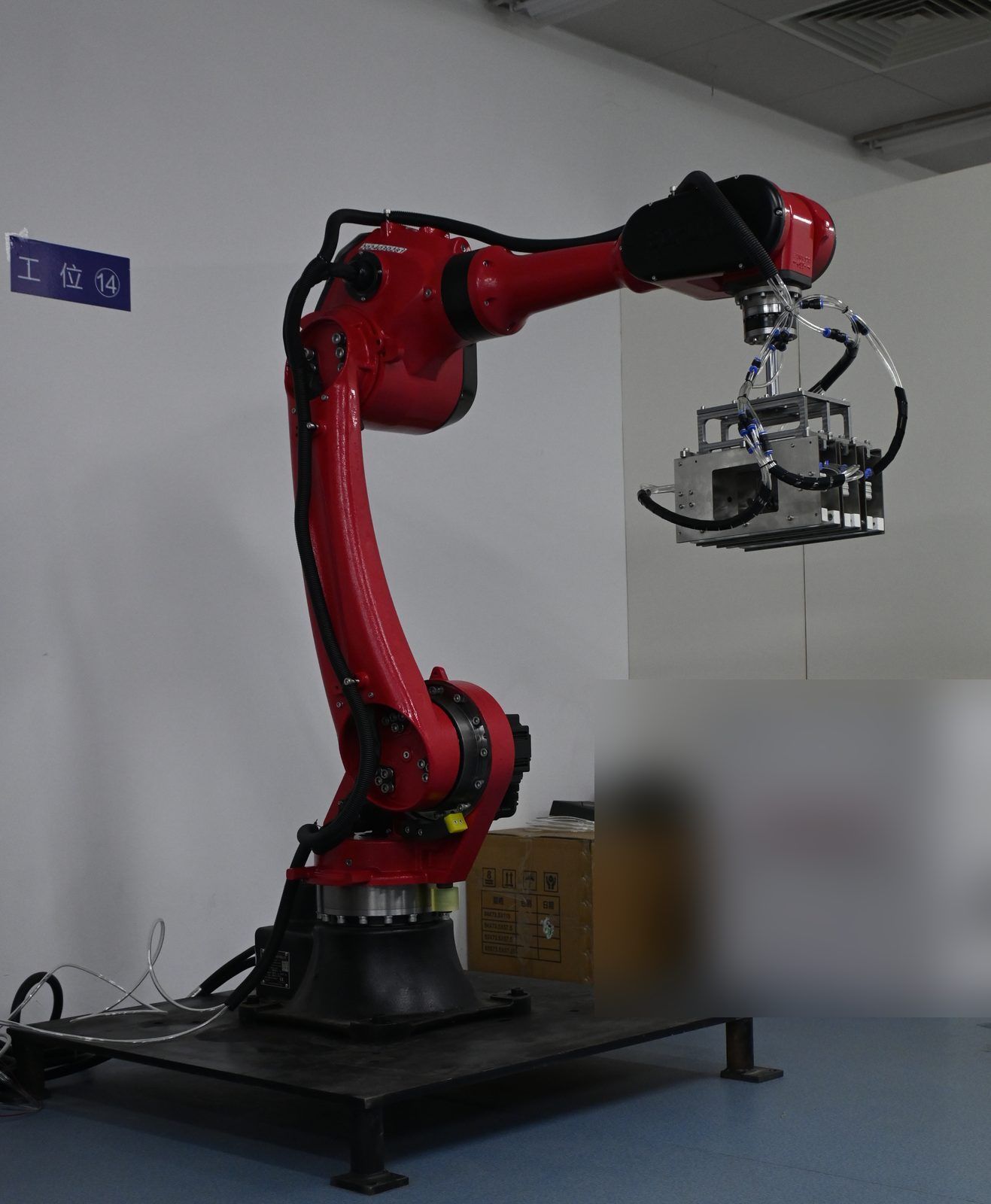
6-Axis Laser Welding Robot MW-RB1506 / MW-RB1510 (6–10 kg, also MIG and TIG)
- Payload
- 6 / 10 kg
- Reach
- 1600 / 1500 mm
- Repeatability
- ±0.05 mm
Automatic and robotic welding
Models · MW-FR5W · MW-FR10W
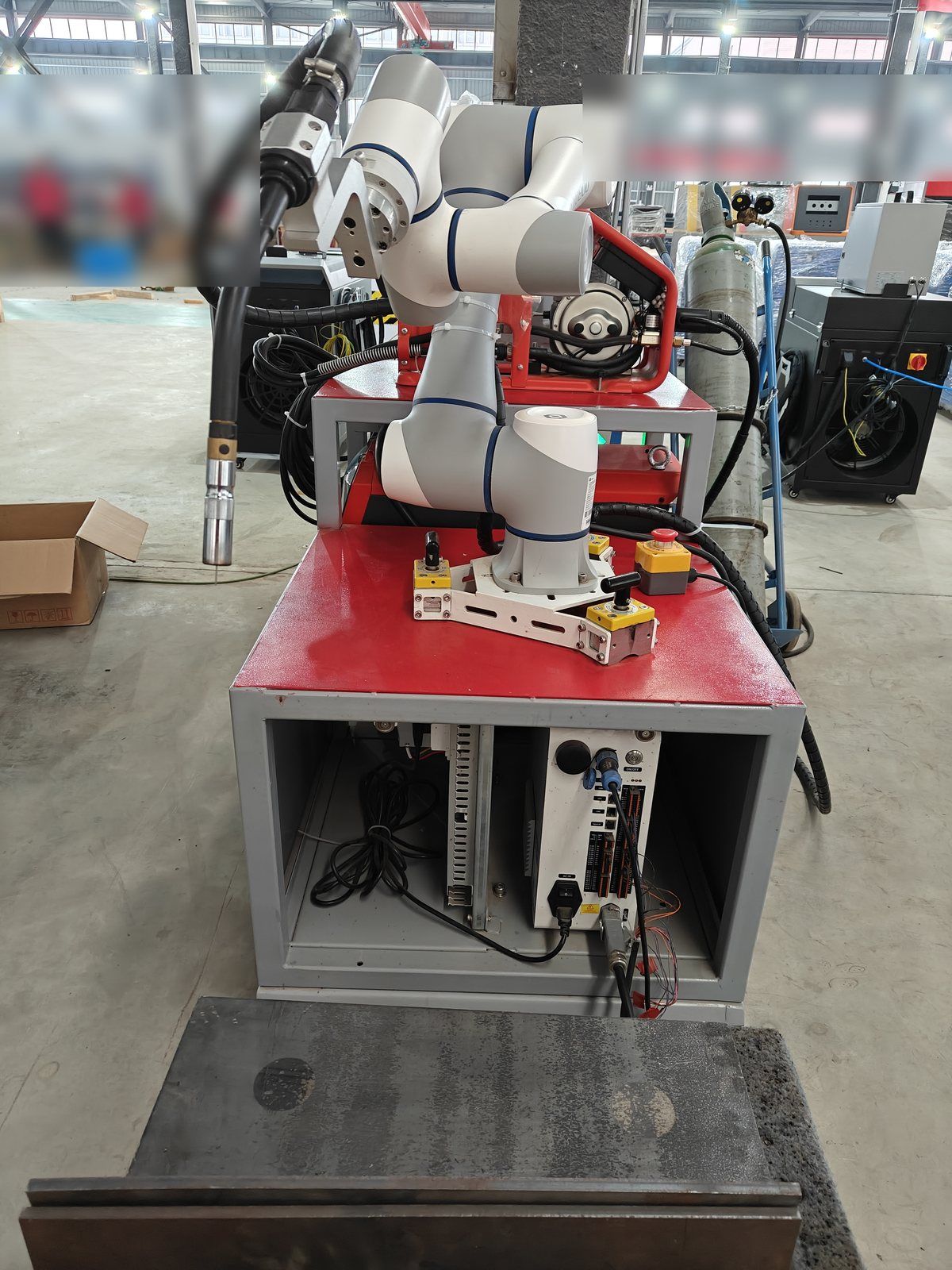
A collaborative welding robot on a mobile cart, in stock. Instead of writing a program, the operator guides the arm by hand to the points of a seam, picks the weld type and starts the run. The MW-FR5W carries 5 kg over 922 mm; the MW-FR10W carries 10 kg over 1400 mm. It suits job shops and small batches where a full robot cell does not pay off.
Ask on WhatsAppor call +44 7762 362563
The MW-FR5W and MW-FR10W are collaborative welding robots for shops that weld in small batches. The arm, its control box and the welding equipment sit on a mobile cart that you roll to the work. To teach a seam, the operator moves the arm by hand to each point and records it; the robot then welds the seam the same way on every part. Both models are in stock.
The MW-FR5W carries 5 kg and reaches 922 mm, repeating to ±0.02 mm. The MW-FR10W carries 10 kg and reaches 1400 mm, repeating to ±0.05 mm. Both have six rotating joints and can be mounted in any orientation.
Cobot welding is welding with a collaborative robot: an arm built to share floor space with people, which holds the torch or laser head and repeats a seam you teach by hand. You move the arm to the start, end and turning points of the seam, record each point, pick the weld type and start the run. There is no robot code to write, so a welder can set up a new part without a programmer.
It pays off when the same part comes back in batches too small for a fixed robot cell: brackets, frames, boxes and repeated seams that now take a skilled welder’s time. Check four things before you buy:
| MW-FR5W | MW-FR10W | |
|---|---|---|
| Payload | 5 kg | 10 kg |
| Reach | 922 mm | 1400 mm |
| Repeatability | ±0.02 mm | ±0.05 mm |
| Typical tool speed | 1 m/s | 1.5 m/s |
| Arm weight | About 22 kg | About 40 kg |
| Best for | MIG torches on small and medium parts | Longer parts, laser heads, torches with sensors |
The welding robots use arms from Maxwave’s MW-FR collaborative robot series. The same arms, without the welding package, are available for handling, machine tending, screwdriving and other jobs:
| Model | Payload | Reach | Repeatability |
|---|---|---|---|
| MW-FR3 | 3 kg | 622 mm | ±0.02 mm |
| MW-FR5 | 5 kg | 922 mm | ±0.02 mm |
| MW-FR10 | 10 kg | 1400 mm | ±0.05 mm |
| MW-FR16 | 16 kg | 1034 mm | ±0.03 mm |
| MW-FR20 | 20 kg | 1854 mm | ±0.1 mm |
The arms weigh about 15, 22, 40, 40 and 85 kg, and their typical tool speed is 1 m/s, rising to 1.5 m/s on the MW-FR10 and 2 m/s on the MW-FR20. All six-joint arms mount in any orientation, are rated IP54 (IP65 as an option) and work from 0 to 45 °C.
A collaborative arm is quick to teach and easy to move between jobs, which suits changing parts and short runs. For long seams, heavy torches and fixed high-volume cells, our six-axis welding robots MW-RB1506 and MW-RB1510 carry 6–10 kg over 1500–1600 mm at higher joint speeds. Laser welding settings by material and thickness are in the handheld laser welding parameters guide.
All machines have a 2-year whole-machine warranty, and training at our Wuhan factory is free.
Talk to an engineer
Tell us the material, thickness and the result you need. An engineer replies with a matched configuration and a quote.
Send your job detailsNeed a different setup?
This site shows only part of our range. Other powers and sizes, custom builds and everything around the machine are available on request.
Ask for the restData
| Models | MW-FR5W / MW-FR10W |
|---|---|
| Axes | 6 rotating joints |
| Payload | 5 kg / 10 kg |
| Reach | 922 mm / 1400 mm |
| Pose repeatability (ISO 9283) | ±0.02 mm / ±0.05 mm |
| Base range and max. speed | ±175°, 180°/s / ±175°, 120°/s |
| Shoulder range and max. speed | +85° to −265°, 180°/s / +85° to −265°, 120°/s |
| Elbow range and max. speed | ±160°, 180°/s / ±160°, 180°/s |
| Wrist 1 range and max. speed | +85° to −265°, 180°/s |
| Wrist 2 and wrist 3 range and max. speed | ±175°, 180°/s |
| Typical tool speed | 1 m/s / 1.5 m/s |
| Protection | IP54, IP65 as an option |
| Noise | < 65 dB |
| Mounting | Any orientation |
| Tool I/O | 2 digital in, 2 digital out, 1 analog in, 1 analog out; 24 V, 1.5 A |
| Base diameter | 149 mm / 190 mm |
| Arm weight | About 22 kg / about 40 kg |
| Typical power of the arm | 260 W average, 310 W peak / 300 W average, 500 W peak |
| Operation | 10.1-inch teach pendant, or web app on a computer, tablet or phone |
| Control box I/O | 16 digital in, 16 digital out, 2 analog in, 2 analog out, 2 high-speed pulse inputs |
| Communication | TCP/IP and Modbus TCP/RTU; CC-Link, Profinet, EtherNet/IP or EtherCAT as options |
| Software development kit | C#, C++, Python, ROS and ROS 2 |
| Welding functions | Spot, stitch, straight, weave, arc and multi-layer multi-pass welding; wire touch-sensing; seam tracking |
| Operating conditions | 0–45 °C, up to 90 % RH, non-condensing |
Values are listed as MW-FR5W / MW-FR10W and are for the arm. Typical power was measured over 24 hours at full payload and full speed. The welding power source, torch or laser head, cart and control box are configured to your process; confirm them with us.
Wuhan Maxwave Laser Technology Co., Ltd. · sales@zerolineai.com · +44 7762 362563 · Specifications may change; confirm your configuration with us.
Fit
Terms
| Quotation and contract | Outside China, ZeroLine, Maxwave's exclusive international partner, quotes and signs the contract. Who does what |
|---|---|
| Minimum order | 1 machine. Dealer and volume pricing on request. |
| Lead time | Standard configurations ship 7–15 working days after the deposit. Custom power, voltage or branding: 15–25 working days. |
| Payment | T/T, 30% deposit and 70% before shipment. L/C at sight for larger orders. |
| Delivery terms | EXW Wuhan, FOB Shanghai or Shenzhen, CIF to your port, or door delivery where available. |
| Packing | Plywood export crate, which needs no fumigation. Small desktop units may ship in a carton. |
| Packing, this machine | Packed weight and crate size for this machine come with the quotation. |
| Shipping documents | Commercial invoice, packing list, bill of lading or air waybill, and certificate of origin. With the machine: an English manual and the record of its factory run. |
| Laser safety | Handheld and open lasers are Class 4 laser products. Plan eyewear, a controlled area and training. Laser safety guide |
| Compliance documents | Ask for the CE declaration of conformity and the test reports for the exact model with your quotation. For the USA, laser products must be reported to the FDA (CDRH): confirm the accession number for the model before you order. |
Typical terms. Your written quotation and contract are binding.
FAQ
Cobot welding means a collaborative robot arm holds the MIG torch or laser welding head and repeats a seam that the operator has taught by moving the arm by hand, instead of writing a robot program. It suits job shops and small batches: teaching a new part takes minutes, and the cart rolls to the next job. For fixed high-volume cells, an industrial six-axis robot is faster.
Switch the arm to drag mode, move it by hand to the start, end and any turning points of the seam, and record each point with the button box. Then choose the weld type, such as straight, stitch, weave or multi-pass, set the welding parameters and start. The operator works from a 10.1-inch teach pendant or a web app on a tablet or phone.
Choose by reach and by the weight at the wrist. The MW-FR5W reaches 922 mm with 5 kg and repeats to ±0.02 mm, which covers a MIG torch on small and medium parts. The MW-FR10W reaches 1400 mm with 10 kg, enough for longer parts or a heavier torch, a laser head or a camera. Send us the part drawing and the torch or head, and we check reach and load.
Yes. Our robots can carry a fiber laser welding head, and the 10 kg arm leaves more margin for a head with a wire feeder. Starting settings by material and thickness are in our handheld laser welding parameters guide; a robot holds the same values on every part.
Collaborative arms are built to share floor space with people and are taught by hand, but the welding arc, spatter and fumes are the same as in manual welding. Plan welding screens, fume extraction and a risk assessment for the cell, and keep people out of the arc's line of sight while it runs.
The arm itself draws about 260 W on average with the MW-FR5W and 300 W with the MW-FR10W. The welding power source sets the main supply, so tell us your mains voltage and the process, and we configure the power source and control box for it.
Automatic and robotic welding
Automatic and robotic welding
Handheld fiber laser welders
Contact
Tell us the material, thickness and the result you need. An engineer replies with a matched configuration and a quote.