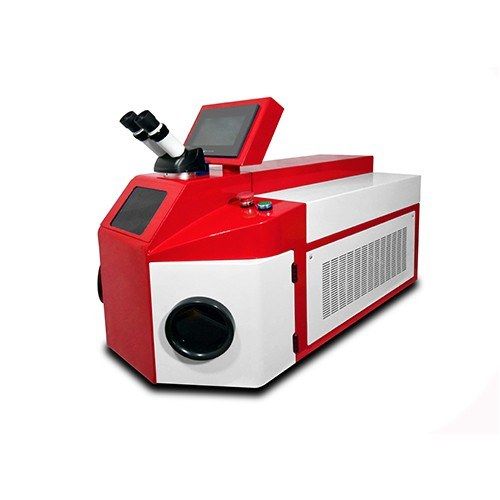
Jewelry laser welders
Desktop Jewelry Laser Welder 100 / 200 W (Nd:YAG, water-cooled)
- Laser power
- 100 / 200 W
- Pulse energy
- ≥ 100 J
- Welding depth
- up to 2 mm
Application · Laser welding · Laser marking
Jewelry laser welders deliver short, precise pulses under a microscope or camera. Jewelers use them for repairs that a torch cannot do safely, and studios use compact welders for permanent jewelry.
Jewelry repair means small joints next to finished surfaces and sometimes next to stones: retipping prongs, closing porosity, repairing chains, resizing rings and joining findings. A torch heats the whole area; a laser heats a spot a fraction of a millimetre wide.
The welder fires short pulses of laser light into a chamber where you hold the piece by hand, viewing it through a microscope or on a CCD screen. Each pulse melts a tiny spot; overlapping pulses build a seam. Argon gas shields the weld from oxidation.
Maxwave started in 2009 building jewelry welders and their pulse power supplies, and we still design the power supplies ourselves.
Permanent jewelry studios weld a jump ring to close a chain or bracelet on the customer’s wrist. They need a compact, low-power welder with a clear camera view, simple settings and a fixed, safe setup.
Decide on the viewing system first, then pulse energy and chamber size. Bench jewelers usually choose a desktop welder with a microscope; studios and markets choose compact CCD units. Our jewelry welder guide explains the differences.
Jewelry laser welders
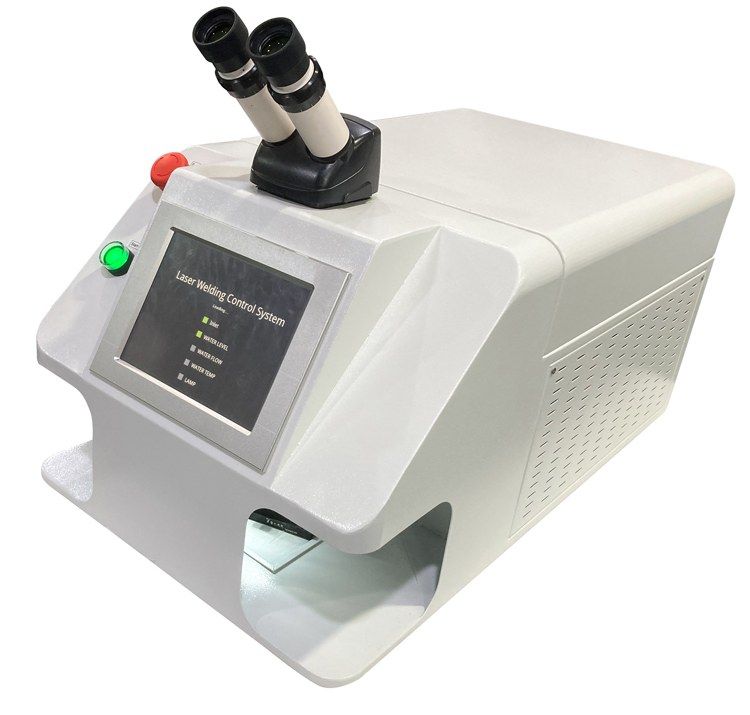
Jewelry laser welders
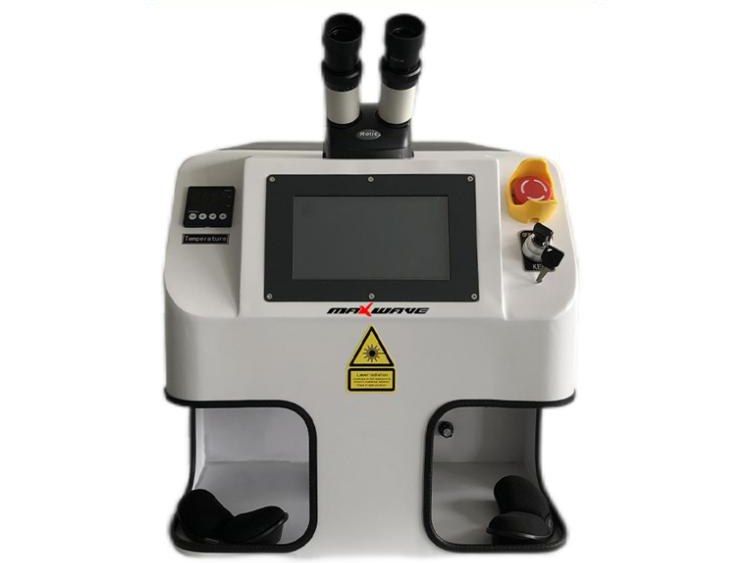
Jewelry laser welders
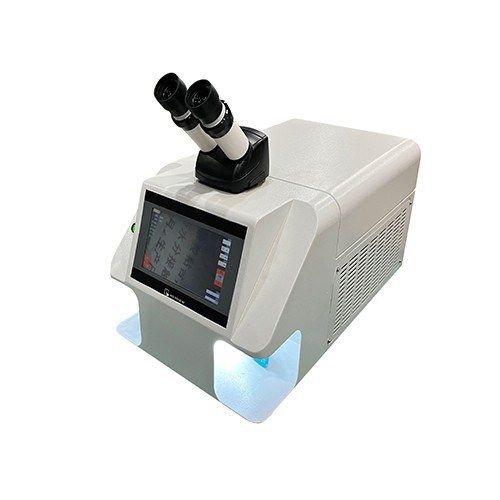
Jewelry laser welders
FAQ
Often yes. The heat stays in a very small zone, so many repairs can be done with heat-sensitive stones in place. Some stones and settings still need care; test on scrap first.
A stereo microscope gives the most precise, three-dimensional view for fine repairs. A CCD camera and screen is easier on the eyes for long sessions and for showing customers, and suits permanent jewelry.
Gold, silver, platinum, palladium, titanium, stainless steel and many alloys. Silver and copper-rich alloys reflect more and need more pulse energy.